
Learning Relentlessly - Reflections on The Mel Robbins Podcast with Dr Gabor Maté
What can a podcast teach us about trauma, relationships and therapeutic fostering? For CFC social worker Julia, it was a reminder of why we must never stop learning.
As our Fostering Differently campaign continues, we’re exploring what it means to go beyond the expected and continually develop the way we care for children and young people.
This October, our focus is Learn Relentlessly, providing the best possible therapeutic care means never standing still. It means staying curious, challenging our assumptions and continually building our understanding of the experiences that shape children’s lives.
We know that behaviour rarely tells the whole story. By continuing to learn from research, training, professional reflection and the experiences of others, we can develop a deeper understanding of what children may be communicating and how best to support them.
Sometimes, that learning comes from unexpected places. For our social worker Julia, a podcast featuring Dr Gabor Maté prompted some thought-provoking reflections on trauma, early experiences and the power of human connection, and how these ideas relate to fostering.
Here, Julia shares what stood out to her and why its messages have stayed with her:
Julia’s Thoughts:
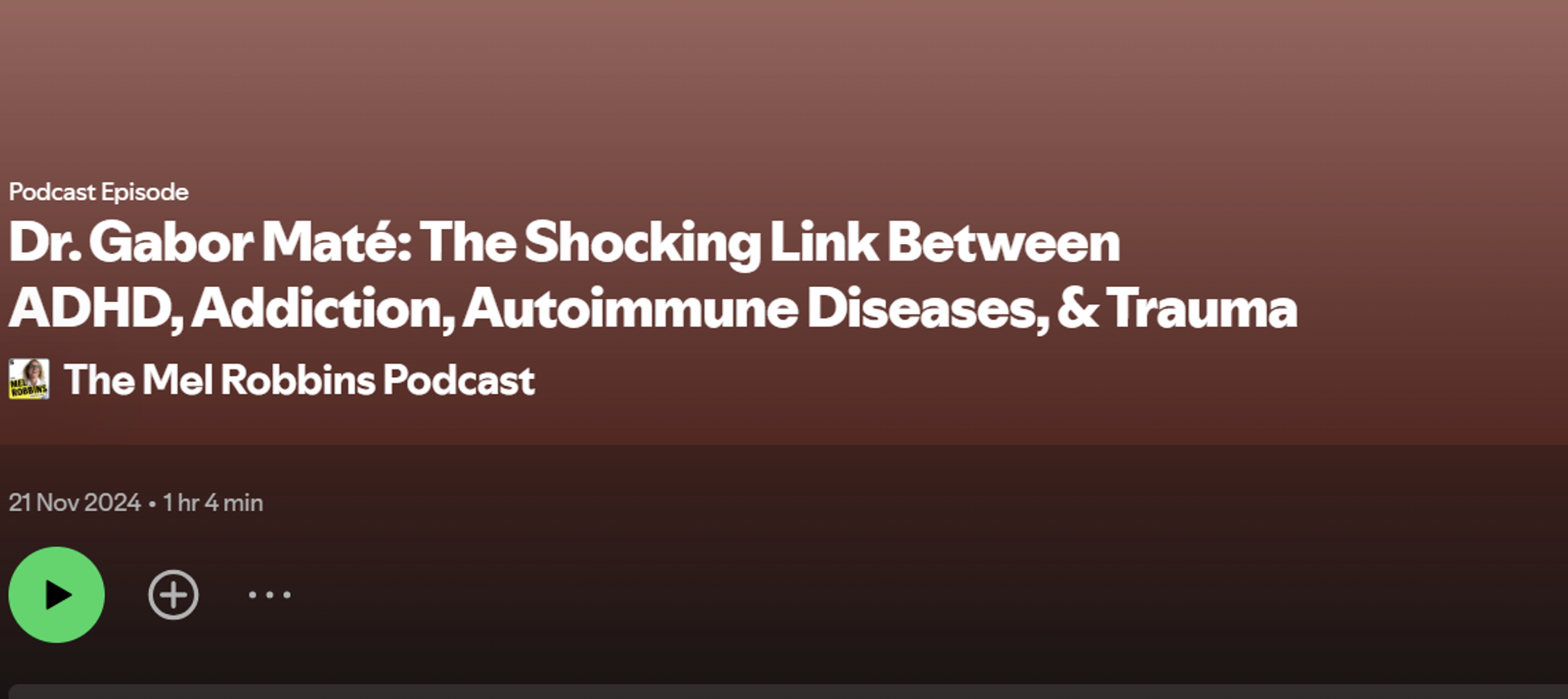
The Mel Robbins Podcast – Dr Gabor Maté: Trauma, ADHD and Addiction
https://open.spotify.com/episode/11CIQfMmZCwkaholwtWaFw
I recently listened to an episode of The Mel Robbins Podcast featuring Dr Gabor Maté, discussing trauma, ADHD, addiction and the impact of our early experiences. I found it really interesting and there were a few things that stayed with me after listening.
One of the things that particularly struck me was Maté’s discussion about pregnancy and how isolated many women can feel during pregnancy in modern society. He talked about the impact that a mother’s stress and environment can have on a developing baby and the importance of recognising that a child’s development can be influenced by experiences even before they are born. This really made me think about how much we may not know about a child’s early experiences and how important it is, in fostering, to try to understand the whole story behind a child rather than simply looking at their behaviour or diagnosis.
I was also really interested in what he said about soldiers returning from Afghanistan and opioid use. He discussed how many soldiers had been exposed to opioids while away, but those who returned to supportive relationships and a strong network of family and friends were much less likely to develop ongoing addiction. His message around the importance of connection really stayed with me. It made me think about how powerful relationships and a sense of belonging can be, particularly for children who may have experienced trauma, loss or disrupted relationships.
This felt very relevant to fostering. As foster carers, we cannot change what has happened to a child in the past, but we can provide them with safety, consistency, connection and relationships that help them feel valued and understood. It reminded me that behaviour is often communicating something, and that taking the time to understand what might be behind that behaviour can be just as important as responding to the behaviour itself.
What challenged me was thinking about how easy it can be to focus on a diagnosis or a particular behaviour and forget that there is a whole child and a whole history behind it. The podcast reminded me to remain curious about what a child may have experienced and what they might be communicating through their behaviour.
I would recommend this podcast because I found it thought-provoking and it encouraged me to think differently about trauma, relationships and the importance of connection. For me, the biggest takeaway was that connection matters, and sometimes the most important thing we can offer a child is a safe, consistent relationship where they feel understood, accepted and that they belong.
Conclusion
Julia’s reflections are a powerful reminder that learning relentlessly is about more than gaining knowledge. It’s about putting that learning into practice. At CFC we believe that by staying curious, continually developing our understanding and looking beyond behaviour to the experiences that may lie behind it, we can help our foster carers provide the therapeutic care children need to feel safe, valued and understood.
We may not be able to change a child’s past, but through consistent, nurturing relationships and a commitment to learning together, we can help shape a more positive future. Because, ultimately, fostering differently means never stopping asking how we can do better for the children and young people who need us.
Take a listen of the podcast to see if it offers any insights you may not have considered before!
